Green Coding
STREAM.fields 26 – CODES of REALITY
Decentralised Symposium | Module 4: Green Coding
The programme consists of a performance MISU by artist Aiko Kazuko Kurosaki; a presentation of the mobile European art project FLUVIALE, introduced by its Croatian co-curator Darko Fritz and festival director Thomas J. Jelinek; and a lecture, Un-greening Greenness, by Jens Hauser, art and media theorist and curator at the intersection of art and science.
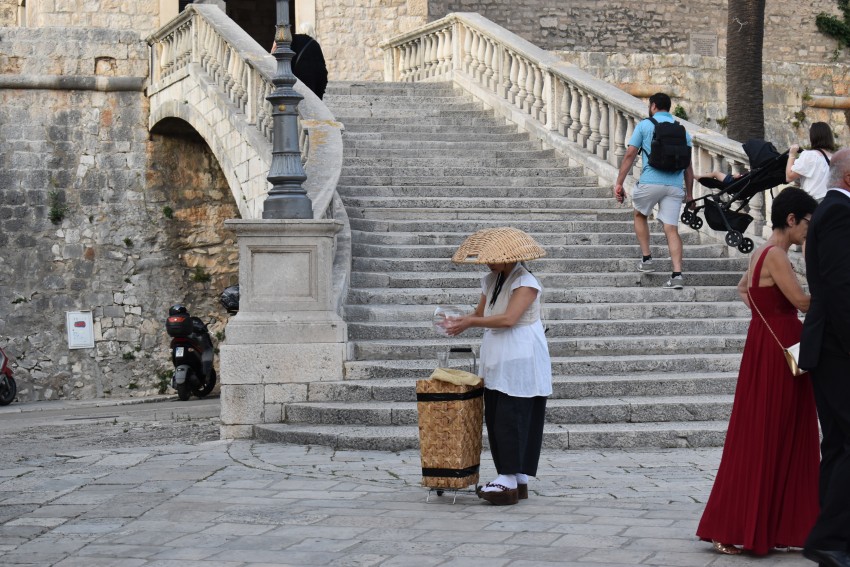
The programme opens with MISU, performance by Aiko Kazuko Kurosaki, taking place in the public space in front of Cultural Information Centre in Zagreb. Addressing water as an essential resource for life and a natural element increasingly threatened by environmental pressures, the performance invites audiences to reflect on our relationship with water and the urgent need to rethink its ecological and cultural significance.
The programme continues with a presentation of FLUVIALE, a mobile European art project, by its Croatian co-curator, Darko Fritz, and festival director Thomas J. Jelinek.
FLUVIALE is a modular, mobile European art project travelling along a north–south axis of more than 4,000 kilometres, from Catania in Sicily to Skjervøy on the Barents Sea. Conceived as a contemporary festival-like aggregation of artistic modules, FLUVIALE responds to the radical transformations of natural, biological and technological environments, as well as to shifting social and political conditions across Europe. Rather than presenting a fixed exhibition, it develops site-specific artistic contributions based on local research, public dialogue and transnational collaboration. The project addresses urgent existential questions — ecological crisis, technological acceleration, resource management and the realistic possibility of humanity's self-endangerment — through critical artistic practice.
The focal point of the public debate is the lecture Un-greening Greenness by Jens Hauser, art and media theorist and curator at the intersection of art and science. His contribution offers a critical examination of contemporary ecological metaphors and the political and epistemological implications of the term green.
What is ‘green’? Are we ‘green’? And is it the vegetative world at all? Are algae superfoods, environmental pests, or both?
The lecture discusses the entanglement of symbolic green, ontological greenness and performative greening, addressing challenges that cut across disciplines and open up an epistemological panorama for the playful debunking of assumptions in technology-aware media arts.
Green, symbolically associated with the natural world and employed to hyper-compensate for what humans have lost, needs to be addressed as perhaps the most anthropocentric of all colours. Despite its seemingly positive connotations of aliveness and naturalness, the term increasingly serves an uncritical, fetishistic desire to metaphorically compensate for a systemic necropolitics that has taken various forms, including the growing technical manipulation of living systems, ecologies and the biosphere, as well as processes of decidedly ‘un-green’ mechanisation.
Paradoxically, green plays a central role in human evolution and self-understanding — as colour, percept, medium, material, biological agency, semantic construct and ideology. In its inherent ambiguity, situated between alleged naturalness and artificiality, and employed to reconcile humans with otherness as such, greenness urgently needs to be disentangled from concepts — themselves often presented as non-technological — such as ‘life’ and ‘nature’.
Together, the performance and lecture establish a platform for dialogue between critical theory, artistic research and public engagement, connecting ecological questions with the social, political and technological realities of our time.
Through this combination of critical reflection, artistic intervention and interdisciplinary collaboration, Green Coding explores how ecological thinking can inform new forms of cultural production, technological awareness and collective responsibility.
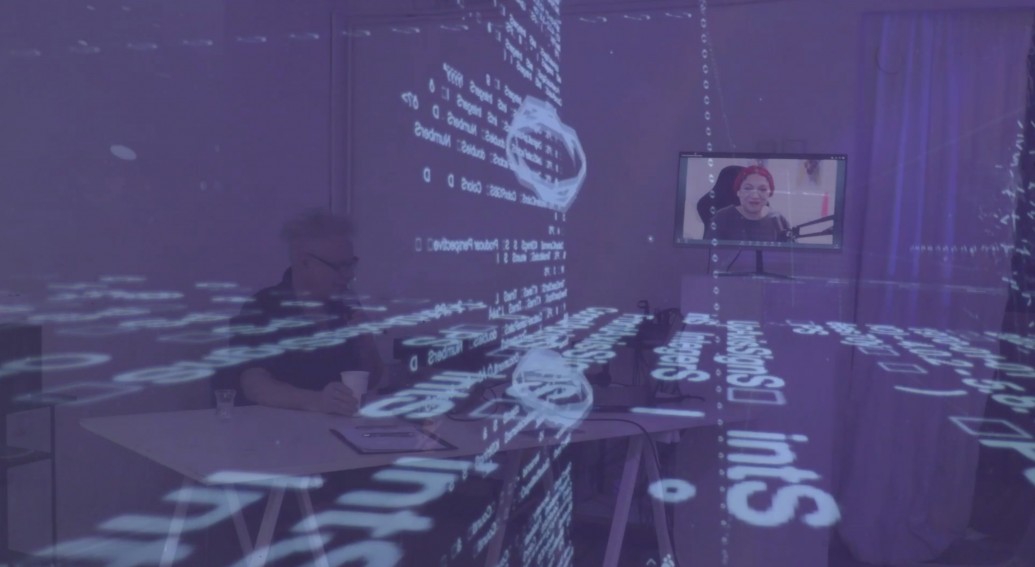
As part of STREAM.fields 26, the decentralised symposium CODES of REALITY continues in Zagreb with its fourth module, Green Coding, bringing together media theory, artistic practice, environmental sciences and public discourse to critically examine the ecological challenges and cultural implications of contemporary technologies.
About authors
Aiko Kazuko Kurosaki was born in Tokyo and lives and works in Vienna. She is an artist, choreographer and performance artist whose practice encompasses performances, live installations, site-specific projects and artistic interventions in public space. Her work addresses ecological and socio-critical issues, including climate change, the relationship between humans and the environment, social responsibility and the consequences of technological development.
Often moving beyond traditional theatrical spaces, she creates interactive works that engage audiences and passers-by. Her practice focuses particularly on water, nuclear energy and its consequences, including projects dedicated to Hiroshima, Nagasaki and Fukushima.
Since 2013, she has been co-initiator and artistic director of One Billion Rising Vienna, as well as artistic director of OBRA – One Billion Rising Austria, an artistic campaign dedicated to ending violence against women and girls. Her awards include the Förderpreis der Freien Szene Wien (2017) and the Österreichischer Frauenringpreis (2018). Her practice brings together art, activism and social engagement, exploring the potential of art as a means of raising awareness and inspiring action in public space.
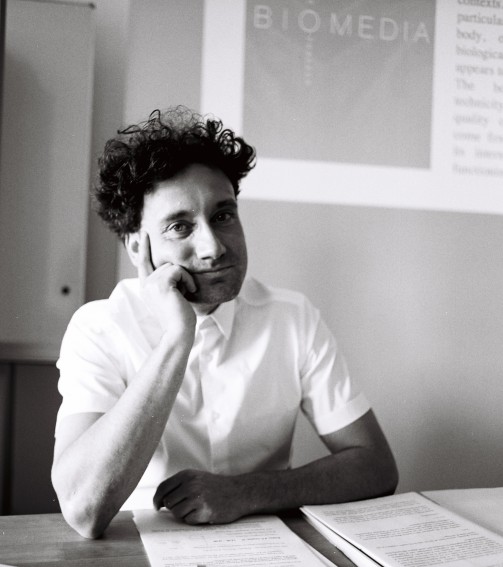
Jens Hauser is a media studies scholar, writer and curator whose work explores the intersections of art, technology, performativity and biological aesthetics. Based in Paris and Vienna, he currently holds academic and research positions at TU Wien, the University of Copenhagen and Michigan State University. His research focuses on biomediality, microperformativity and greenness studies, bridging media theory, art history and the sciences.
As a curator, he has organised around thirty international exhibitions and festivals, including L’Art Biotech, sk-interfaces, WETWARE, UN/GREEN and Holobiont. Life is Other. He also serves on international art and science award juries, including Ars Electronica.
Thomas J. Jelinek is a transdisciplinary conceptual artist, director, dramaturge and curator. His practice brings together performance and media arts, theatre, video, installations and light spaces, exploring the mechanisms of perception and the construction of reality. He develops experimental and immersive forms of media performance and theatre, as well as interactive installations and transdisciplinary projects at the intersection of art and science. As a curator and artistic director, he has realised international festivals and art projects, including TRANSART Croatia and the TEST.TUBE.LAB series. He is artistic director of NOMAD.theatre, co-founder, dramaturge and scenographer of Liquid Loft, and founder of several art groups and spaces. With Liquid Loft, he received the Golden Lion at the Venice Biennale in 2007.